English
 French
 Spanish
 Italian


Crepe Paper
CoCopac supplies cellulose-based crepe paper for food-contact applications requiring low-level moisture absorption. Unlike a flat sheet, the paper has a raised, ridged texture that creates its distinctive creped appearance.
It can be used across selected dairy and poultry applications, including cheese ageing and absorbent dressings for whole poultry. The dimensions and specification can be developed around the product, pack and expected moisture level.
Features
Crepe paper provides a simple paper-based option where gentle moisture management is required rather than the higher absorbency of a conventional meat or fish pad.
Low-level absorbency
Crepe paper is designed for relatively light moisture levels, with typical absorbency discussed at approximately 400 to 500ml per square metre, depending on the selected grade and specification.
Cellulose-based construction
Its cellulose-based construction makes crepe paper a useful option where customers are looking to reduce the use of plastic-based absorbent materials, provided it remains suitable for the food and application.
Developed around the application
The right product will depend on the food, dimensions, moisture level, storage conditions and packing process. CoCopac can review an existing sample or specification and help identify an appropriate option.
Example Crepe Paper Applications
The examples below show typical uses, although the final grade and dimensions should be selected around the individual product and process.
Cheese Ageing
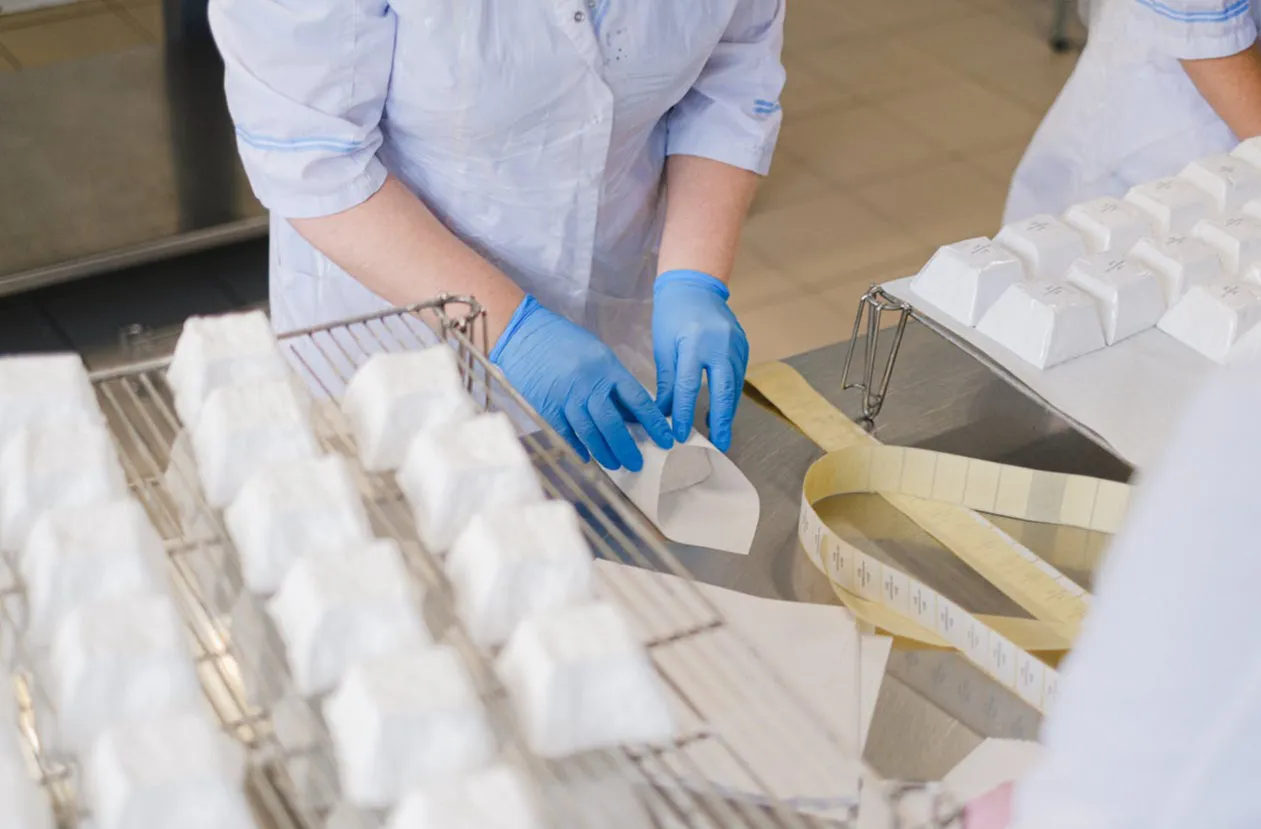
Absorbent crepe paper used beneath selected cheeses during ageing or storage, helping to manage light levels of surface moisture.
Poultry Absorbent Dressings
Crepe paper formats used with whole poultry before freezing or packing to help manage moisture around the product. This format is sometimes informally referred to within the industry as a “turkey nappy”.
Bespoke Low-Absorbency Applications
Paper-based formats for specialist food products where a conventional high-absorbency pad would be unnecessary or unsuitable.
Crepe Paper FAQs
Common questions about the construction, absorbency and food applications of crepe paper.
What does “crepe paper” mean?
In this context, crepe describes the raised, ridged texture of the paper. Rather than being completely flat, the sheet has a crinkled profile that distinguishes it from ordinary food-contact paper.
How is crepe paper different from an absorbent pad?
Crepe paper provides relatively low absorbency and is entirely paper-based. Conventional meat and fish pads are generally designed for much higher fluid levels and may contain additional absorbent or plastic-based components.
Can crepe paper be used for cheese?
Yes. Crepe paper has been supplied for selected cheese-ageing and dairy applications, where it can sit beneath the product and help manage light levels of moisture. The correct grade should be selected around the cheese and storage process.
Can it be used with poultry?
Yes. Crepe paper can be converted for selected whole-poultry applications, including absorbent dressings used before freezing or packing. The required dimensions and absorbency will depend on the product and process.
Is crepe paper recyclable or compostable?
The product discussed is cellulose-based and may offer recyclable, biodegradable or compostable characteristics. However, the appropriate disposal route depends on the exact grade, food contamination, local waste facilities and any certification required, so claims should be confirmed for the final application.